


The SUV is clean, the seller says it has never had an accident, and the asking price looks fair. Then, after payment, a warning light appears, the transmission shifts poorly, or a previous repair becomes obvious. A CarChecker.ae mobile car inspection is designed to catch those problems before the money changes hands, while the vehicle is still sitting at the seller’s home, dealership, or office.
For used-car buyers in the UAE, convenience matters, but independence matters more. You need an inspection that looks beyond a polished exterior and a reassuring sales pitch. The right inspector comes to the car, checks the evidence, and gives you a clear basis for deciding whether to buy, negotiate, or walk away.
What a CarChecker.ae mobile car inspection does differently
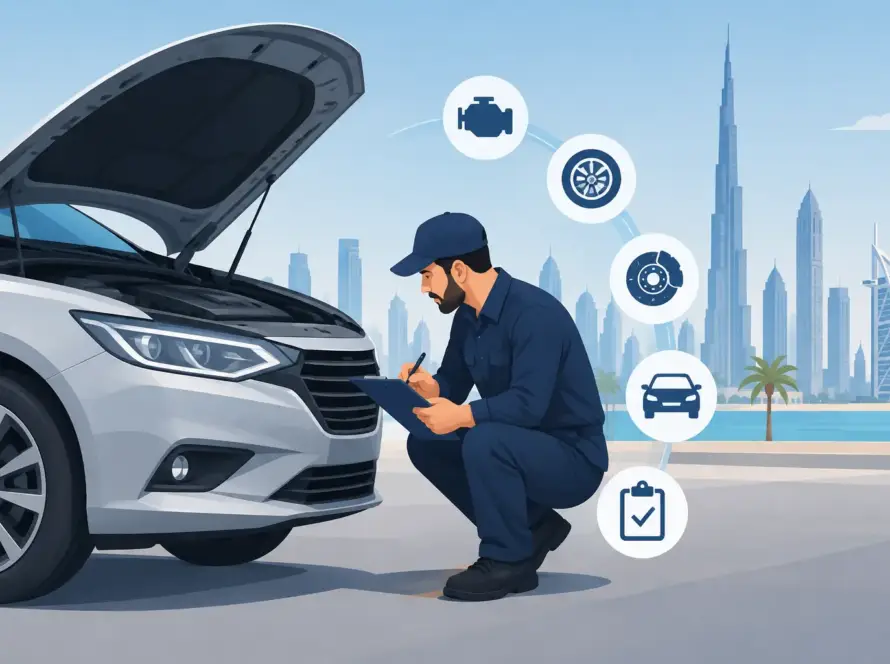
Our inspection brings the most qualified and experienced vehicle inspector to the location of the car. There is no need to arrange transport to a garage, wait for a workshop appointment, or rely on a seller to choose the facility. That is especially useful when you are viewing a vehicle in another emirate, comparing several listings, or trying to secure a car before another buyer does.
But mobility is not the main benefit. The value is an independent evaluation made for the buyer, not the seller. Our inspection combines visual checks, mechanical assessment, diagnostic scanning, vehicle-history review, underbody examination, and a road test where conditions allow. The purpose is not to make a used car look perfect. It is to reveal its real condition and the financial risk attached to it.
A seller may genuinely be unaware of a fault. A dealer may have completed cosmetic preparation without addressing an underlying issue. Either way, your decision should be based on evidence, not assumptions.
What should be checked before you buy
A worthwhile inspection looks at the vehicle as a complete system. One clean panel or a smooth ten-minute drive cannot confirm that a car has been cared for properly. Every area tells part of the story and we, being the original, most specialized and experienced company means no one does it better than us.
Accident damage and structural condition
Paintwork can hide repairs remarkably well. Inspectors look for inconsistent panel gaps, overspray, mismatched paint texture, signs of body filler, replaced components, and irregular welds or fasteners. They also examine the chassis and underbody for evidence of collision repairs, corrosion, impact damage, or poor-quality work.
Not every repaired car is unsafe or automatically a bad purchase. A minor, properly repaired cosmetic claim is different from structural damage or rushed repair work. The key is knowing what happened, how extensive it was, and whether the price reflects it. Not every inspection company will know how to tell the difference
Engine, transmission, and mechanical systems
The inspection should assess the engine for leaks, unusual noises, overheating risks, smoke, fluid condition, and visible repair concerns. Transmission behavior, steering response, suspension noise, brakes, tires, and cooling-system condition all deserve attention as well.
These findings have practical consequences. Worn tires and brake pads may be normal negotiation items. A gearbox fault, serious oil leak, overheating concern, or suspension damage can turn an attractive asking price into an expensive mistake. An inspector should explain the difference plainly, including which items need immediate action and which can be planned for later.
Computer diagnostics and warning lights
A dashboard with no warning lights is not proof that the car has no faults. Diagnostic scanning can identify stored error codes, intermittent faults, sensor issues, and system warnings that may not be visible during a viewing. It can also indicate whether a warning light has been cleared shortly before the inspection.
Diagnostics are particularly useful on premium vehicles, where electronic systems control everything from air suspension and parking sensors to driver-assistance features. They are equally valuable on ordinary daily drivers, because a small-looking electronic fault can become a costly repair when parts and labor are involved.
Interior, exterior, and equipment
The cabin reveals how a vehicle has been used. Wear that does not match the displayed mileage, non-functioning switches, damaged seat controls, weak air conditioning, faulty cameras, or missing accessories all matter. In the UAE, air conditioning performance is not a small comfort feature. It is a core part of whether the vehicle is suitable for daily use.
Exterior checks should include lights, glass, wheels, tires, seals, trim, and signs of water entry. A thorough report should use photos and video where helpful, so you can see the issue instead of trying to interpret a vague note after the fact.
Road test and maintenance evidence
A road test can expose vibration, brake pull, abnormal engine response, steering issues, transmission hesitation, and suspension noise that are hard to identify while parked. It should be conducted safely and only when the vehicle, location, and seller’s permission allow it.
Maintenance records also need context. A stamped book or a stack of invoices can be encouraging, but it does not replace a physical inspection. Look for consistent servicing, evidence of major scheduled work, and records that match the vehicle’s age and mileage. Gaps in history do not always mean the car is bad, but they do increase uncertainty and may affect what you are willing to pay.
Electric vehicles, luxury cars, and specialty vehicles need added scrutiny
The basics apply to every used car, but some vehicles need more specialized attention. With electric vehicles, the battery, charging system, high-voltage components, fault codes, thermal management, and charging behavior should be assessed. Battery condition is central to range, usability, and long-term value.
Luxury and performance vehicles can carry higher repair exposure because of advanced electronics, turbocharged engines, air suspension, complex cooling systems, and costly components. A cheap price on a premium vehicle can sometimes reflect deferred maintenance rather than a genuine bargain.
For commercial vehicles, SUVs, and vehicles that may have been used off-road, underbody condition becomes even more significant. Damage beneath the vehicle may not be apparent during a quick walkaround, yet it can affect safety, reliability, and resale value.
When a mobile inspection is most valuable
You should inspect any used vehicle before committing to buy, but the need is even greater in a few common situations. This includes a private-sale vehicle with limited paperwork, a car listed at a price that seems unusually low, a cross-emirate purchase, or a vehicle with imported history. It also applies when a seller pushes for a deposit before you have had time to verify the car.
Do not assume a dealer’s own check is the same as an independent buyer inspection. A dealer may have its own preparation standards or warranty terms, but an independent inspector works for your interests. That difference matters when repair estimates, negotiation, or a decision to walk away is on the table.
The service is also useful for confident enthusiasts. Knowing cars does not give you access to diagnostic tools, underbody views, paint-depth evidence, or a second set of experienced eyes. Expertise reduces risk, but independent verification reduces it further.
How to use the inspection report to make a smart decision
A detailed report is only useful if it helps you act. Once the inspection is complete, separate findings into three categories: safety or major mechanical concerns, repairs that should affect the price, and normal wear consistent with the vehicle’s age and mileage.
If the vehicle has serious structural concerns, major engine or transmission problems, or signs that its history does not align with the seller’s claims, walking away can be the most cost-effective decision. Paying for an inspection that saves you from the wrong car is money well spent.
If the issues are manageable, use the evidence to negotiate fairly. Ask for the cost of urgent repairs to be reflected in the price, rather than accepting broad assurances that the seller will “take care of it.” The report gives you specific facts to discuss: tire age, fault codes, leak locations, damaged parts, service gaps, or evidence of previous repairs.
CarChecker.ae provides one complete inspection package rather than asking buyers to choose between limited tiers. That approach matters because hidden risk does not adjust itself to your budget. Whether you are buying your first UAE car or upgrading to a high-value vehicle, you deserve the same depth of assessment and a report you can understand.
Book before you hand over a deposit
The best time for a mobile car inspection is before you make a nonrefundable commitment. Tell the seller that an independent inspection is part of your buying process. A reasonable seller should understand that a serious buyer needs to verify a serious purchase.
Send us the vehicle details, seller’s contact and our team will organize everything. Then let the inspection replace guesswork with evidence. The right car will stand up to scrutiny, and if it does not, you will be glad you found out while you still had the freedom to choose.


1 Comment