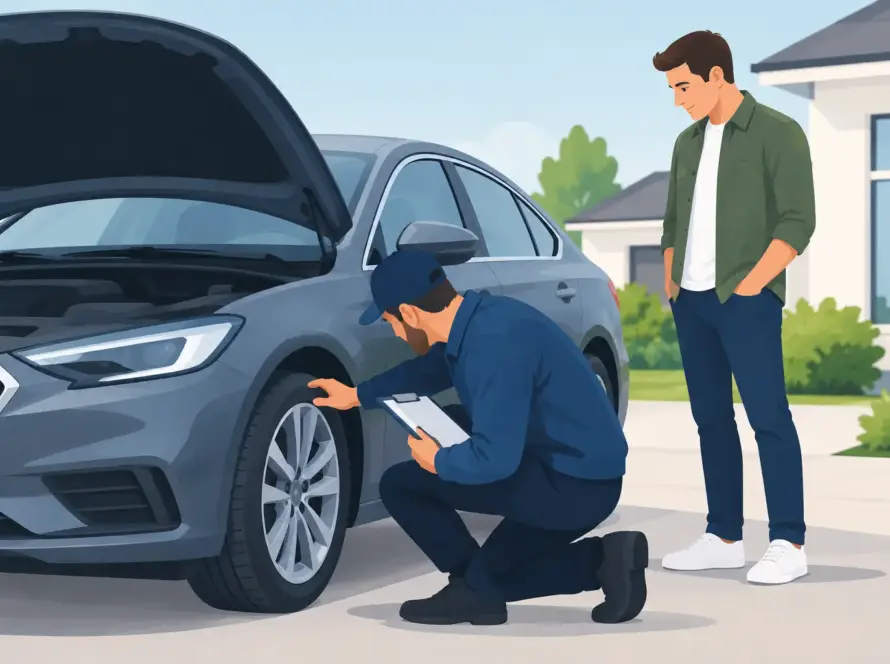
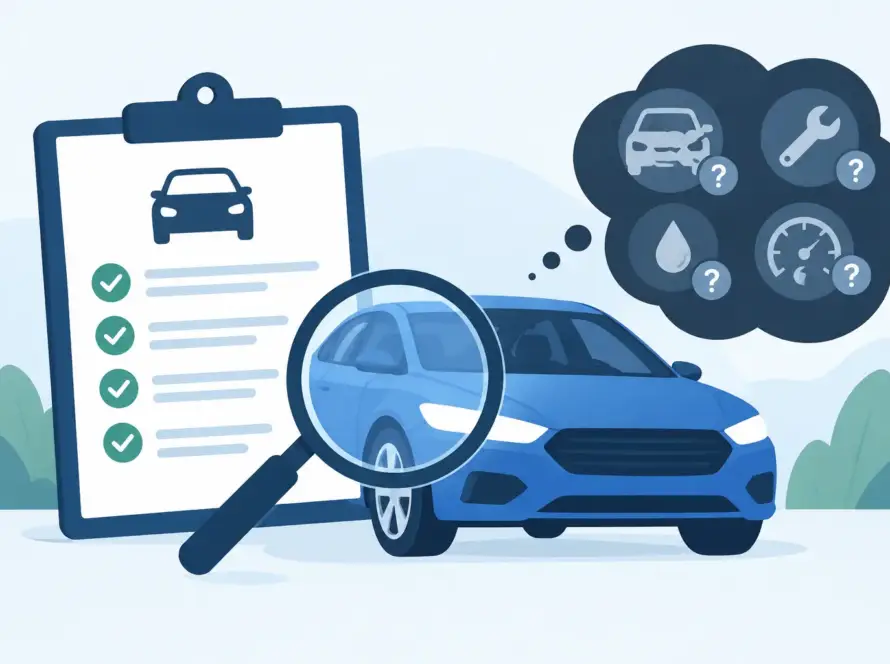
A clean exterior, a polished dashboard, and a seller who says “no issues” can make a used car look like a safe bet. But in the UAE, a car can hide accident repairs, overdue maintenance, flood exposure, warning lights cleared just before viewing, or faults that only appear once it is driven. If you are searching for how to evaluate used car options before handing over your money, treat the viewing as an investigation, not a quick test drive.
The goal is not to find a perfect used vehicle. It is to establish its real condition, understand what it will cost you after purchase, and decide whether the asking price still makes sense. A few careful checks can reveal when to negotiate, when to budget for repairs, and when to walk away.
Start With the Paper Trail, Not the Paintwork
Ask for the vehicle identification number, registration details, service records, and recent repair invoices before getting attached to the car. Confirm that the VIN on the paperwork matches the VIN plate on the vehicle. Any mismatch deserves a clear explanation before you go further.
Service history matters because it shows whether the owner has followed the manufacturer’s maintenance schedule. Look for evidence of regular oil changes, brake service, tire replacement, cooling-system work, and major mileage-based services. On higher-mileage vehicles, missing records do not automatically mean the car is bad, but they do increase your risk and should affect the price you are willing to pay.
Ask direct questions: Has the car been in an accident? Has it had engine, transmission, or electrical work? Is there any remaining warranty? Why is it being sold? A seller may not know every detail, especially with a trade-in, but evasive answers are different from honest uncertainty.
Vehicle-history checks can also reveal information that appearance cannot, including previous damage records, import status, mileage inconsistencies, and ownership history where available. A car advertised as GCC-spec should be verified, not accepted on trust alone. Specifications and prior use can affect parts availability, resale value, insurance, and how well the vehicle handles UAE heat.
How to Evaluate a Used Car From the Outside
Inspect the car in daylight and give yourself time. Fresh detailing can make almost any vehicle look impressive for 20 minutes. Stand back from each side and look down the body panels. The reflections should appear reasonably straight and consistent. Ripples, waviness, mismatched paint texture, or panels that look a slightly different shade can point to previous repairs.
Check the gaps around the hood, doors, trunk, headlights, and fenders. Uneven gaps may result from a poor repair, misalignment, or replacement parts after a collision. Open and close every door, the hood, and the trunk. They should latch smoothly without requiring a hard slam.
Pay attention to these common warning signs:
- Overspray on rubber seals, trim, lights, or inside door openings
- Cracked, cloudy, or mismatched headlights
- Rust around the underbody, suspension components, or door edges
- Tires with uneven wear, sidewall cracks, or different brands across an axle
- Windshield chips or cracks, particularly in the driver’s view
Tires tell a useful story. Uneven inner-edge wear can suggest alignment, suspension, or steering issues. Four new tires are not automatically a positive sign either. Ask why they were replaced and inspect the manufacturing date. In the UAE, heat and age can harden rubber even when tread depth still looks acceptable.
Check the Cabin and Electronics
The interior should match the car’s stated mileage and overall story. Excessively worn pedals, steering wheel, seat bolsters, or driver controls on a low-mileage vehicle may be a clue to harder use than advertised. This is not proof of odometer tampering, but it is a reason to investigate further.
Turn on every system you expect to use. Test the air conditioning at idle and while driving, because weak cooling is not always obvious when the car is parked. In the UAE, effective AC is not a luxury feature. It is essential, and repairs can become expensive if the issue involves the compressor, evaporator, or electrical controls.
Check the windows, mirrors, central locking, seat adjustments, infotainment screen, cameras, parking sensors, sunroof, lights, wipers, horn, and steering-wheel controls. Warning lights should illuminate briefly when the ignition is switched on, then turn off after the engine starts. A warning light that stays on needs diagnosis. One that never appears during the ignition check can be just as concerning.
Smell the cabin as well. A strong air freshener can conceal smoke, mold, or water damage. Damp carpets, stained headliners, corrosion under seats, or electrical problems may indicate water intrusion. Those issues can be difficult and costly to resolve properly.
Look Under the Hood, but Do Not Guess
With the engine cold if possible, inspect for oil leaks, coolant residue, damaged wiring, loose covers, and non-standard repairs. Check fluid levels where accessible, but do not rely on fluid color alone to judge engine health. A recently cleaned engine bay can hide leaks just as easily as it can reflect good care.
Start the engine and listen. It should settle into a smooth idle without persistent knocking, rattling, loud ticking, or smoke from the exhaust. Watch the temperature gauge as the engine warms up. Overheating, coolant loss, or cooling-fan problems are particularly serious in high UAE temperatures.
For hybrid and electric vehicles, the evaluation needs additional depth. Battery condition, charging performance, high-voltage-system warnings, cooling circuits, and the condition of the charging equipment all matter. An EV may drive quietly while carrying a battery or charging-system issue that changes its value dramatically. Do not buy based only on remaining range shown on the screen.
The Road Test Is Where Claims Meet Reality
A proper road test should include city streets, moderate acceleration, braking, turns, and, where practical, highway speeds. Do not let the seller rush it. Drive with the radio off for part of the test so you can hear the car.
The engine should accelerate cleanly without hesitation, misfires, or unusual noises. The transmission should shift smoothly, whether it is automatic, manual, dual-clutch, or CVT. Any harsh engagement, delayed response, shuddering, or slipping deserves attention. Some transmission behavior can be corrected with service or software, but others point to major repair costs.
On a straight road, briefly loosen your grip on the steering wheel while remaining in control. The car should not pull strongly to one side. During braking, it should stop straight without vibration through the pedal or steering wheel. Listen for clunks over bumps and feel for steering looseness, vibration, or wandering at speed.
Keep an eye on the dashboard throughout the test. Warning lights, rising temperature, reduced-power messages, or a check-engine light that returns after a few minutes are not small details. They are evidence that the car needs a diagnosis before a purchase decision.
Use Diagnostics and a Professional Inspection
A basic code scan is valuable, but it is not the same as a complete inspection. Diagnostic equipment can identify current and stored fault codes, monitor live data, and reveal systems that need further investigation. However, a scan alone cannot confirm chassis integrity, hidden accident repairs, underbody damage, suspension wear, poor-quality paintwork, or the mechanical condition of every component.
This is where an independent pre-purchase inspection protects you. The seller has an interest in completing the sale. A thorough inspector works for the buyer, checking the engine, transmission, chassis, underbody, electronics, maintenance condition, vehicle history, and road behavior with evidence to support the findings.
CarChecker.ae brings that assessment to the vehicle’s location across the UAE, so you do not need to organize a workshop visit before deciding. A detailed report with photos, videos, diagnostic findings, and plain-English guidance gives you something more useful than a verbal opinion. We are on your side when the facts are unclear.
Decide With the Total Cost in Mind
Do not ask only, “Is this car good?” Ask, “Is this car worth this price in this condition?” A vehicle with worn brakes, aging tires, a leaking suspension component, and overdue service may still be a sensible purchase if the price accounts for the work. The same car at full market price is a different decision.
Separate urgent safety repairs from routine maintenance and cosmetic imperfections. Safety concerns, structural damage, major engine or transmission faults, cooling problems, and serious electrical issues should make you cautious. Minor scratches, a worn floor mat, or a service due soon are usually negotiable costs, not automatic deal-breakers.
Before you transfer a deposit or commit to a seller, make sure the condition, records, and price all tell the same story. The right used car is not the one with the shiniest finish. It is the one you understand well enough to buy with your eyes open.