


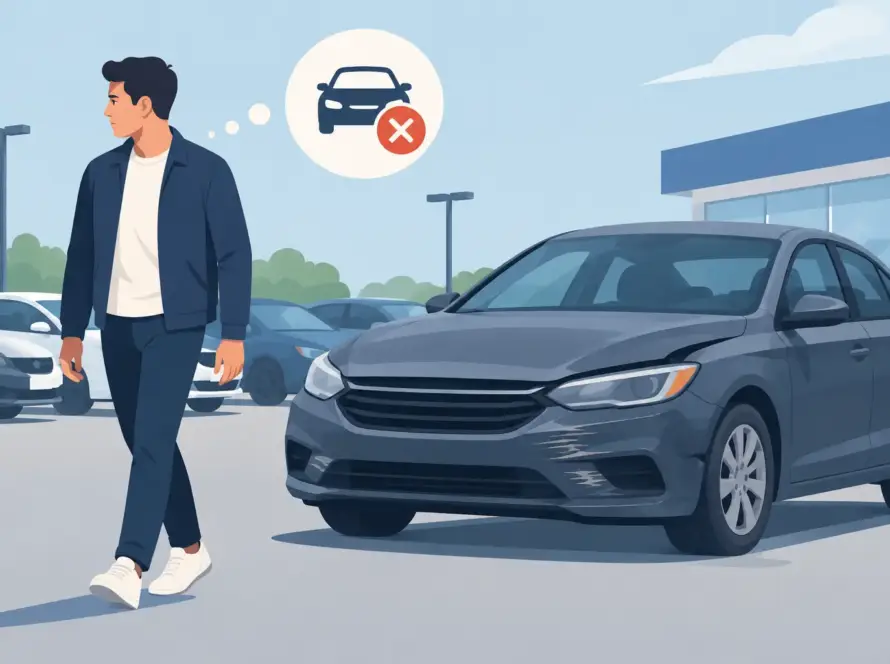
A clean-looking used car can still carry the evidence of a serious collision beneath fresh paint, polished tires, and a convincing seller story. Knowing how to check accident damage on a used car means looking beyond the obvious dents. You are trying to establish whether repairs were cosmetic and properly completed, or whether the vehicle has structural, mechanical, or safety issues that could cost you long after the purchase.
A minor bumper repaint is not automatically a reason to walk away. A poorly repaired chassis rail, uneven suspension geometry, or warning lights cleared just before viewing the car is a very different situation. The goal is not to reject every car with a history. It is to understand the repair quality, the remaining risk, and the price you should be willing to pay.
Start With the Seller’s Answers and the Paper Trail
Ask directly whether the car has been in an accident, what panels were repaired or replaced, where the work was done, and whether invoices are available. A credible seller should be able to give a clear, consistent answer. Vague phrases such as “just a small touch-up” or “only cosmetic” deserve follow-up questions, especially when several panels show signs of repainting.
Service records can help establish a timeline. Look for repair invoices, insurance documents, alignment reports, and receipts for replacement lights, radiators, airbags, suspension parts, or cooling components. A major collision often affects more than the visible bodywork. If the front bumper was replaced, for example, it is reasonable to ask whether the condenser, radiator support, sensors, headlights, or crash bar were also inspected.
A vehicle-history search may reveal reported accidents, title concerns, mileage inconsistencies, or periods when the car was off the road. It is useful evidence, but it is not a complete inspection. Some accidents are never reported, and a clear record does not prove that a vehicle has never been repaired.
Check Accident Damage on a Car in Daylight
Inspect the vehicle outdoors in natural, indirect daylight whenever possible. Bright showroom lighting and a freshly washed surface can hide paint defects. Stand several steps away and look down each side of the car from different angles. Reflections in the paint often reveal uneven surfaces that are hard to see head-on.
Pay close attention to color consistency. A repaired panel may be slightly darker, lighter, or more metallic than surrounding panels. Look at the doors, fenders, hood, trunk, and bumpers from multiple angles. Differences are often easiest to spot around panel edges, door handles, mirrors, and fuel doors.
Paint texture can also tell a story. Factory paint is usually consistent. Warning signs include overspray on rubber seals, trim, lights, wheel liners, and door latches; rough paint edges; dust trapped beneath clear coat; sanding marks; or a rippled finish. A magnet is not reliable on modern vehicles because many use aluminum, plastic, and composite panels. A paint-depth gauge is more useful, as unusually high readings can indicate filler or repainting. Still, it takes experience to interpret readings correctly across different manufacturers and panel materials.
Check every panel gap. The spaces around the hood, trunk, doors, headlights, and taillights should look even from side to side. A slightly uneven bumper gap can result from a simple parking impact, but inconsistent gaps across several panels may point to rushed refitting or underlying structural movement. Open and close each door, the hood, and the trunk. They should latch smoothly without needing force, lifting, or slamming.
Look Behind the Cosmetic Repairs
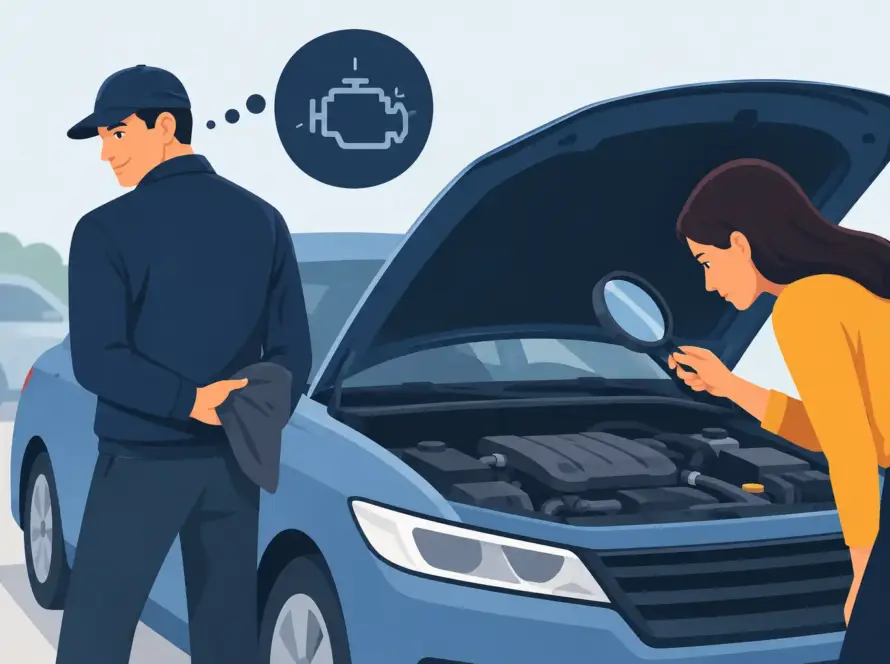
The engine bay and trunk are where a superficial repair can become a larger concern. Lift the hood and examine the bolts holding the fenders, hood hinges, and latch assembly. Tool marks, scratched bolt heads, or paint missing around bolts may indicate that panels have been removed or adjusted. This is not proof of a bad repair by itself, but it gives you a reason to investigate further.
Look along the upper radiator support, inner fenders, and strut towers for fresh seam sealer, uneven welds, non-factory paint, creases, cracks, or distorted metal. Factory spot welds and sealant generally have a consistent pattern. Repairs can look neat, but they rarely match factory construction perfectly.
In the trunk, raise the carpet and inspect the spare-wheel well, side compartments, and rear body panels. Wrinkled metal, fresh undercoating, moisture, welding marks, or mismatched sealant can point to a rear impact. Check underneath the trunk lid and around the taillight mounting areas as well.
Underbody inspection is essential. A seller may detail the top of the car while the underside still shows bent suspension arms, damaged shields, crushed jacking points, leaks, or uneven undercoating covering repair work. Look at the chassis rails, subframes, floor pan, exhaust, and suspension mounting points. Damage near these areas can affect handling, tire wear, alignment, and crash protection.
Do Not Skip Tires, Suspension, and Steering
Accident damage often announces itself through the way a car sits or drives. First, look at the tires. Uneven wear on one edge, feathering across the tread, or a noticeably newer single tire may indicate poor alignment, bent suspension components, or a previous impact. Tires can wear unevenly for ordinary maintenance reasons too, so treat them as a clue rather than a verdict.
Check whether the vehicle sits level on flat ground. A corner that appears lower than the others could be caused by a worn spring or damaged suspension. Turn the steering wheel from lock to lock while parked and listen for knocks, clicking, or groaning. Then inspect the wheel arches and compare the gap above each tire.
During a road test, choose a route with smooth pavement, moderate speeds, braking opportunities, and a few turns. The car should track straight when you briefly relax your grip on a level road. It should not pull sharply under braking, wander, vibrate through the steering wheel, or make clunks over bumps. A steering wheel that sits off-center can be an alignment issue, but if repeated alignment cannot correct it, structural damage may be involved.
Scan the Car and Check Its Safety Systems
Modern vehicles store valuable clues in their electronic control modules. A professional diagnostic scan can identify current, pending, and historic fault codes related to airbags, seat-belt pretensioners, parking sensors, cameras, radar systems, steering, ABS, and stability control. Clearing a warning light does not repair the cause, and some faults return only after the vehicle completes a drive cycle.
Inspect the dashboard when the ignition is switched on. Warning lights should illuminate briefly as part of the self-check, then turn off after the engine starts. Be cautious if the airbag light never comes on at all. In some cases, sellers or repairers may alter the dashboard display to hide a fault.
Check that the horn, seat belts, reverse camera, parking sensors, lights, mirrors, windshield washers, and driver-assistance features work as expected. After a collision, sensors may be replaced but not calibrated correctly. On newer cars, that can affect adaptive cruise control, lane support, automatic emergency braking, and blind-spot monitoring.
Know When a Professional Inspection Is Worth It
A careful buyer can find many warning signs, but determining the severity of structural repair requires equipment, access, and trained judgment. This is especially true with luxury vehicles, performance cars, EVs, and newer vehicles packed with safety sensors. An EV also needs battery, charging-system, and underbody assessment because damage to the battery enclosure can be expensive and safety-critical.
An independent pre-purchase inspection gives you evidence before you negotiate or transfer money. At CarChecker.ae, the inspection comes to the vehicle and assesses bodywork, chassis areas, mechanical systems, computer diagnostics, road-test behavior, maintenance history, and visible underbody condition. The point is not to create anxiety over every repaired panel. We are on your side, translating the findings into the practical question that matters: is this car safe, fairly priced, and worth buying?
If the seller refuses a proper inspection, will not allow a road test, or pressures you to pay before the vehicle can be checked, treat that as useful information. There will always be another car. The right used car should stand up to questions, evidence, and an independent set of eyes before you invest.

1 Comment