A used car can look perfect under showroom lights, arrive freshly washed, and still carry a repair bill large enough to erase any savings. That is why the real question is not whether a seller seems convincing. It is when should buyers walk away from a vehicle that may become an expensive problem after the paperwork is signed?
In the UAE, buyers often move quickly when they find the right model, price, mileage, and specification. A clean-looking SUV in Dubai or a premium sedan offered below market value can feel like an opportunity that will disappear by tomorrow. But urgency is not a reason to accept uncertainty. A vehicle can be repaired, but not every repair is sensible, safe, or fairly reflected in the asking price.
The right decision comes down to evidence. Some findings create room for negotiation. Others should stop the purchase completely.
When Should Buyers Walk Away? Start With Safety and Structure
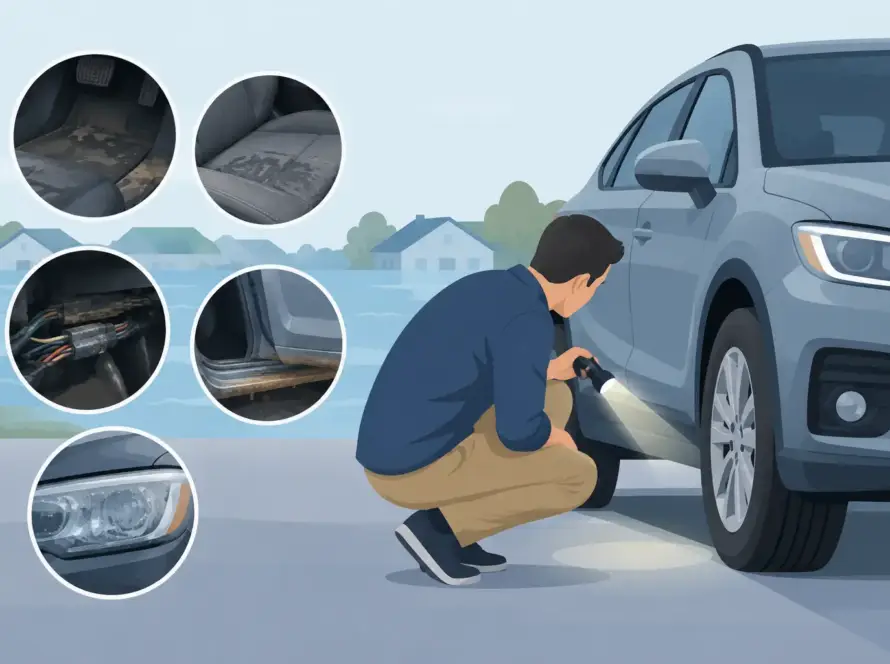
Walk away when an inspection identifies serious structural damage, especially if the seller cannot provide a clear, credible explanation of repairs. Chassis damage, distorted suspension mounting points, poor-quality welding, or signs of major collision repair can affect how a car absorbs impact and how it drives at speed.
Cosmetic paintwork is not automatically a reason to reject a car. A repaired bumper or minor scratch is common and may have little effect on ownership. The concern begins when paint-depth readings, panel gaps, overspray, uneven underbody repairs, or replacement components point to a significant accident that was not disclosed.
A car may drive straight during a short test drive while still hiding a compromised structure. This is why a proper inspection needs to go beyond a quick walk-around. Underbody checks, chassis assessment, suspension evaluation, and a road test can reveal concerns that a seller’s description will not.
Safety-related faults deserve the same firm approach. Airbag warning lights, disabled safety systems, brake concerns, damaged tires, steering play, or serious suspension wear should never be treated as minor details. Some issues can be repaired, but a seller who dismisses them or refuses to allow an independent inspection is showing you exactly how the vehicle has been handled.
A Warning Light Is a Clue, Not a Diagnosis
A dashboard with no warning lights does not prove that a car is fault-free. Some faults are intermittent. Others may have been cleared shortly before the viewing. Computer diagnostics can identify stored fault codes, communication errors, sensor issues, and problems affecting the engine, transmission, airbags, ABS, and other control systems.
Buyers should be especially cautious when a warning light appears during a test drive, when the seller says a light is “just a sensor,” or when diagnostic faults conflict with the seller’s explanation. A sensor may indeed be inexpensive. It may also be connected to a much larger issue, such as a transmission fault, emissions problem, cooling failure, or electrical malfunction.
The key question is whether the cause has been identified and supported by repair records. If it has not, you are being asked to buy uncertainty. That can be acceptable only when the price, risk tolerance, and likely repair cost are fully understood. For most buyers, it is a reason to pause – and often to walk away.
Engine and transmission problems rarely stay cheap
Engine smoke, overheating, persistent fluid leaks, rough idling, misfires, abnormal noises, or weak acceleration need careful investigation. The same applies to delayed gear changes, slipping, shuddering, hard shifts, or transmission warning messages.
A seller may say the vehicle simply needs a service, a battery, or a software reset. Sometimes that is true. But symptoms do not make a diagnosis. In the UAE’s heat, cooling-system weaknesses and neglected maintenance can quickly become major engine damage. A cheap car with an unresolved overheating history is rarely a bargain.
Walk away when the engine or transmission shows serious symptoms and there is no verified repair path, no reliable maintenance evidence, or no meaningful discount to account for the risk. You should not need to gamble on the two most expensive systems in the vehicle.
Missing History Can Be as Risky as Bad History
A complete service record is not a guarantee of a perfect car. However, a missing, inconsistent, or suspicious maintenance history should change how you assess the deal.
Look for logical mileage progression, invoices that match the vehicle’s age and use, and evidence of routine maintenance such as oil changes, brake work, tire replacement, and manufacturer-recommended services. Be wary when mileage seems unusually low for the car’s condition, when service stamps appear without supporting invoices, or when the seller cannot explain long gaps in maintenance.
For higher-mileage vehicles, premium cars, performance models, and large SUVs, maintenance history matters even more. Deferred work on these vehicles can be costly. A neglected luxury car may have an attractive purchase price but require suspension, cooling, electrical, or drivetrain work that changes the true cost of ownership immediately.
Vehicle history checks also matter. If the available information suggests accident records, export history, inconsistent mileage, or prior use that does not match the seller’s account, ask direct questions. If the answers keep changing, do not rationalize it. Transparency is part of the deal.
The Seller’s Behavior Is Part of the Inspection
The vehicle is not the only thing being evaluated. The seller’s conduct can reveal whether you are stepping into a fair transaction or a difficult one.
A seller who encourages an independent inspection, shares service documents, and answers questions consistently is making it easier for you to verify the car. A seller who rushes you, refuses a road test, will not allow diagnostic scanning, insists on a deposit before inspection, or says other buyers are waiting may be trying to control the process.
Not every rushed seller is dishonest. Some are genuinely busy or need to sell quickly. Still, a legitimate reason for urgency does not remove your right to inspect before you invest. If a seller will not allow enough time for proper due diligence, walk away. There will always be another car. There may not be another chance to avoid this one.
When a Repair Is a Negotiation Point, Not a Deal Breaker
Not every inspection finding means you should reject the vehicle. Used cars will often need routine work, and a thorough report may identify worn brake pads, aging tires, a weak battery, minor fluid seepage, cosmetic damage, or upcoming service needs.
These issues become negotiation points when they are clearly defined, reasonably priced, and reflected in the final agreement. A buyer can accept them with confidence if the car is structurally sound, mechanically healthy, honestly represented, and priced accordingly.
The difference is predictability. Replacing tires or completing a scheduled service is predictable. Buying a vehicle with unexplained overheating, concealed accident damage, recurring fault codes, or a questionable transmission is not.
For electric vehicles, the same principle applies. A cosmetic scratch may be manageable. Battery-health concerns, charging-system faults, warning messages, or damage around the high-voltage system require specialist assessment before any commitment. EV repairs can be highly technical, and a low purchase price does not protect you from a large battery or electrical bill.
Use the Numbers, Not the Emotion
Before you make an offer, add up the real cost: purchase price, registration, insurance, immediate repairs, upcoming maintenance, tires, and any work identified during the inspection. Then compare that number with similar vehicles that have clearer histories and fewer risks.
If the total no longer makes sense, walking away is not losing a deal. It is avoiding a costly mistake. This is particularly true when a seller’s asking price leaves no room for the repairs the vehicle already needs.
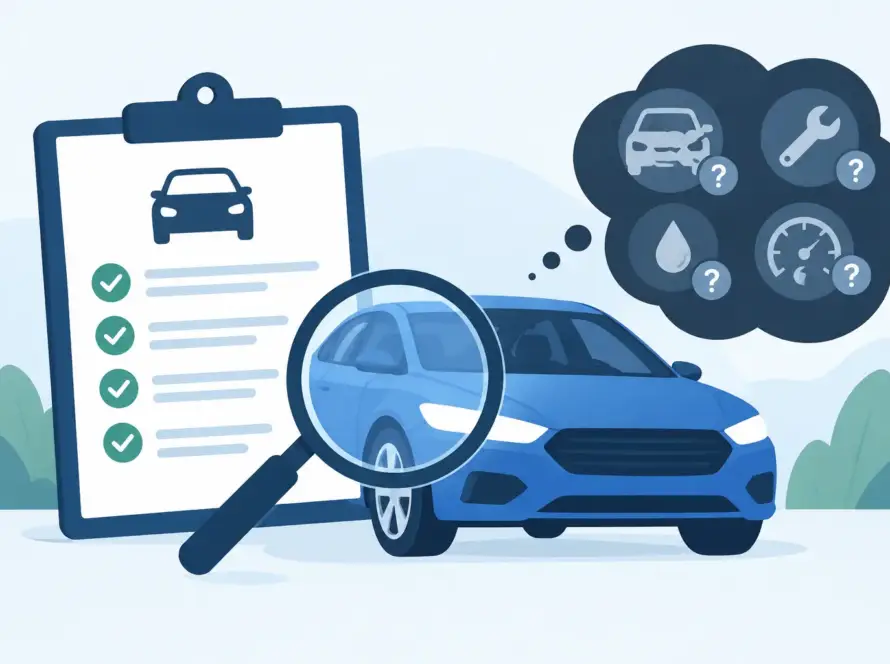
An independent mobile inspection gives you a practical way to make that call at the vehicle’s location. CarChecker.ae assesses the mechanical condition, diagnostics, bodywork, chassis, underbody, road behavior, maintenance evidence, and more, then explains the findings in plain language. We are on your side, not the seller’s.
The best used-car purchase is not always the cheapest one or the most polished one. It is the one whose condition, history, and price all make sense together. If the evidence does not add up, protect your budget, thank the seller for their time, and keep looking.