


A clean-looking SUV in Dubai can still carry the story of a serious collision, flood exposure, skipped maintenance, or a mileage discrepancy. A vehicle history check is one of the smartest first steps before you commit to a used car, but it is not a complete answer. It tells you what has been recorded. It cannot reliably tell you what a seller, workshop, or previous owner never reported.
That distinction matters when you are comparing listings, negotiating a price, or deciding whether a vehicle is worth inspecting at all. Inspect before you invest – but make sure you know what each check can actually prove.
What a vehicle history check is designed to reveal
A vehicle history check uses the vehicle identification number, or VIN, along with available records to build a picture of the car’s past. Depending on the vehicle, its country of origin, and the databases available, it may identify registration details, prior ownership information, accident or insurance records, odometer readings, import status, recalls, theft reports, and title or finance-related concerns.
For a buyer in the UAE, the VIN is the starting point. It should match the number displayed on the vehicle’s chassis, documentation, and registration records. A mismatch is not a small paperwork issue. It is a reason to pause the purchase until the vehicle’s identity and legal status are fully clarified.
History data can also raise useful questions. If a vehicle was imported after an accident, for example, the listing photos and seller’s description may not reflect the extent of the original damage. If mileage readings appear inconsistent, the car needs closer scrutiny. If its past shows repeated ownership changes over a short period, ask why. None of these findings automatically makes a car a bad purchase, but each one changes the level of risk and the questions you should ask.
Why a clear report is not the same as a clear car
The biggest mistake buyers make is treating a clean history result as proof that the vehicle is mechanically sound. It is not.
Accidents are not always reported to an insurer or recorded in every database. Repairs may have been paid for privately. A seller may have repaired cosmetic and structural damage before listing the car, and a basic history report may never show it. The same is true of engine faults, transmission issues, worn suspension components, cooling-system leaks, electrical problems, and weak air-conditioning performance. These are physical conditions, not necessarily historical records.
A history check also cannot assess repair quality. A car could have a recorded accident that was repaired correctly to a high standard. Another could have no accident record but show poor panel alignment, overspray, non-original welds, chassis distortion, or hidden corrosion. The report tells you where to look. A proper inspection determines what is actually there.
This is especially relevant for premium vehicles, performance cars, and SUVs in the UAE. A luxury badge does not protect a buyer from neglected maintenance, hard use, or expensive deferred repairs. In fact, the cost of getting the decision wrong is often higher.
Use history findings to ask better questions
A useful vehicle history check should make your conversation with the seller more specific. Instead of asking, “Has the car had any issues?” you can ask about a particular ownership period, mileage entry, accident date, or import record.
If the vehicle has an accident record, ask what was damaged, where it was repaired, and whether invoices or photos are available. Look for a direct answer, not a vague reassurance that it was “just a minor touch-up.” If maintenance records are incomplete, ask which workshop serviced the car and when major items were last replaced. Timing components, brakes, tires, batteries, cooling-system parts, and suspension components all have real replacement costs.
Be equally careful with a seller who says the car is “accident-free” without defining what that means. Some sellers mean there was no major structural crash. Others mean no insurance claim they know about. Those are very different statements. Ask for evidence, then independently verify the condition.
A vehicle history check needs a physical inspection
The safest used-car buying process has two parts: research the vehicle’s record and inspect the vehicle in front of you. One cannot replace the other.
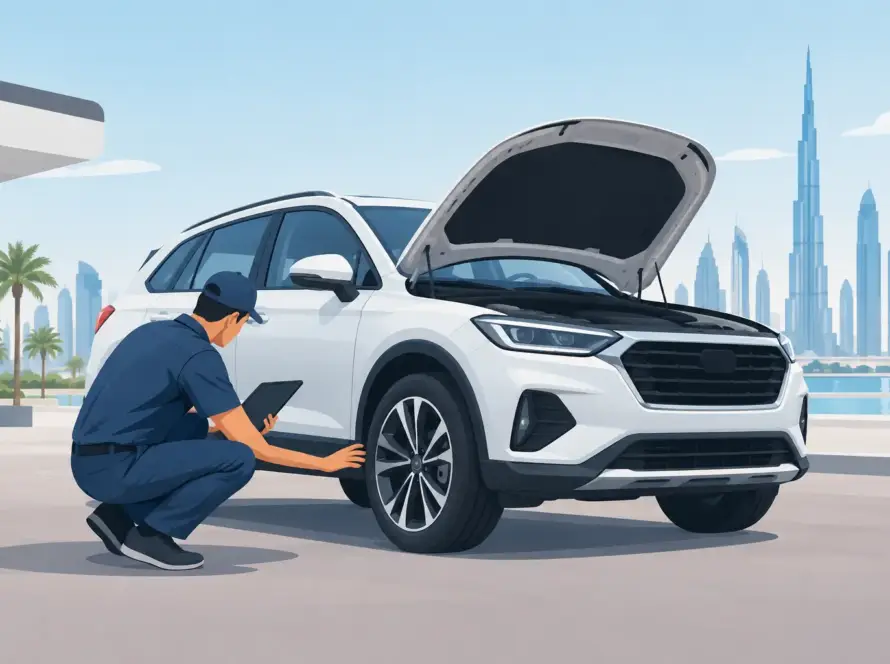
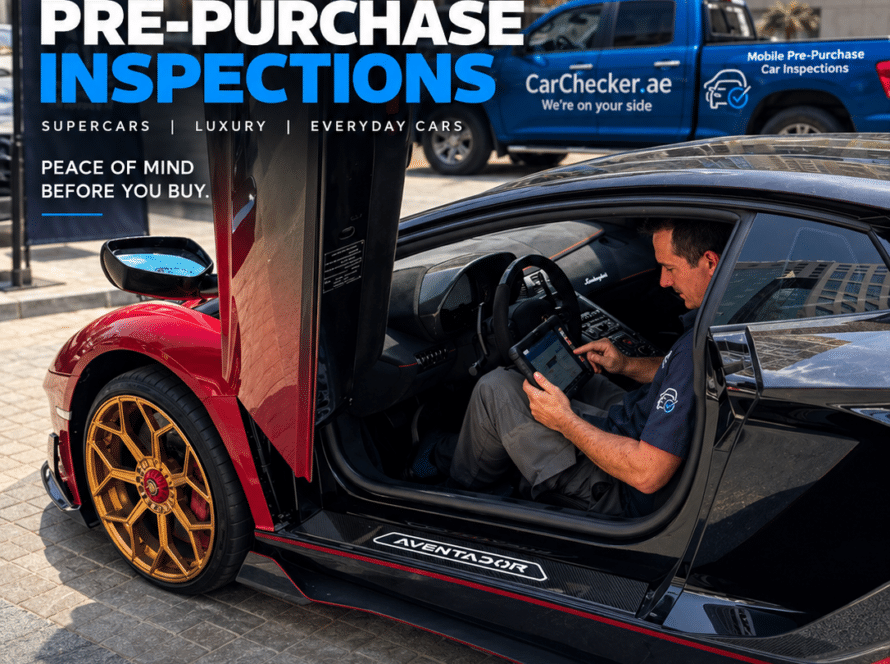
The CarChecker.ae pre-purchase inspection looks beyond the information available in a database. It examines body panels and paintwork for signs of repair, checks the chassis and underbody, scans electronic control modules for fault codes, assesses the engine and transmission, evaluates tires, brakes, suspension, steering, and air conditioning, and road-tests the car where possible. It can also compare visible condition with the history you have found.
That comparison is where hidden problems often become clear. An accident record may lead an inspector to look closely at one corner of the car for poor repairs or misalignment. A suspicious mileage pattern may prompt closer review of interior wear, pedal condition, steering-wheel wear, and service documentation. A car with no reported incidents may still reveal replaced structural parts or diagnostic faults that deserve attention.
For electric vehicles, the gap between history and condition is just as important. A record may confirm basic vehicle information, but it will not establish battery health, charging-system performance, warning messages, or the condition of high-voltage components. Those require an EV-specific inspection.
CarChecker.ae brings that inspection to the vehicle’s location across the UAE, so buyers can assess the car where it is being sold rather than relying on a seller’s convenience or a quick visual look in a parking lot. We’re on your side: the goal is not to sell the car, but to give you evidence for your decision.
Watch for gaps in imported vehicle records
Many used vehicles in the UAE have been imported, often from the United States, Japan, or other markets. Import status is not automatically a problem. Plenty of imported cars are well maintained and fairly priced. The risk is buying one without understanding its full background.
Records from another country may be incomplete, delayed, or unavailable through the sources you check. A vehicle may also have been sold at auction after damage, repaired elsewhere, and imported under a description that does not explain the earlier condition. This is why auction photos, repair documentation, and a thorough structural inspection can be valuable when available.
Pay close attention to a price that seems far below similar local-market examples. It may be a genuine opportunity, but it may also reflect a previous accident, specification differences, missing warranty coverage, expensive upcoming repairs, or a history that is harder to verify. Low price is not proof of value. Condition, documentation, and repair quality determine value.
When the history check should make you walk away
Not every concern means you must reject a vehicle. A documented minor repair with good workmanship may be acceptable if the price reflects it. A missing service invoice may be manageable if the car’s current condition is strong and you budget for preventive maintenance.
Some issues deserve a firmer response. Walk away, or at least stop before paying a deposit, if the VIN does not match, ownership documents are unclear, mileage appears manipulated, the seller refuses an independent inspection, or there are signs of structural damage that cannot be explained and verified. The same applies when a seller pressures you to decide immediately or dismisses legitimate questions as unnecessary.
Used-car buying always involves some uncertainty. The objective is not to find a vehicle with no history. It is to find one whose history, present condition, and price make sense together.
Make the decision with evidence, not optimism
Before arranging to see a used car, request the VIN and run a vehicle history check. Review the result before you become attached to the color, trim, or test-drive feel. Then verify the car itself with an independent inspection that includes diagnostics, structural checks, underbody assessment, and a road test where conditions allow.
A seller’s confidence is not evidence. A polished exterior is not evidence. A clean-looking report is not evidence of mechanical health. The right car will stand up to reasonable questions and independent scrutiny – and that gives you far more confidence than a promise ever can.

1 Comment