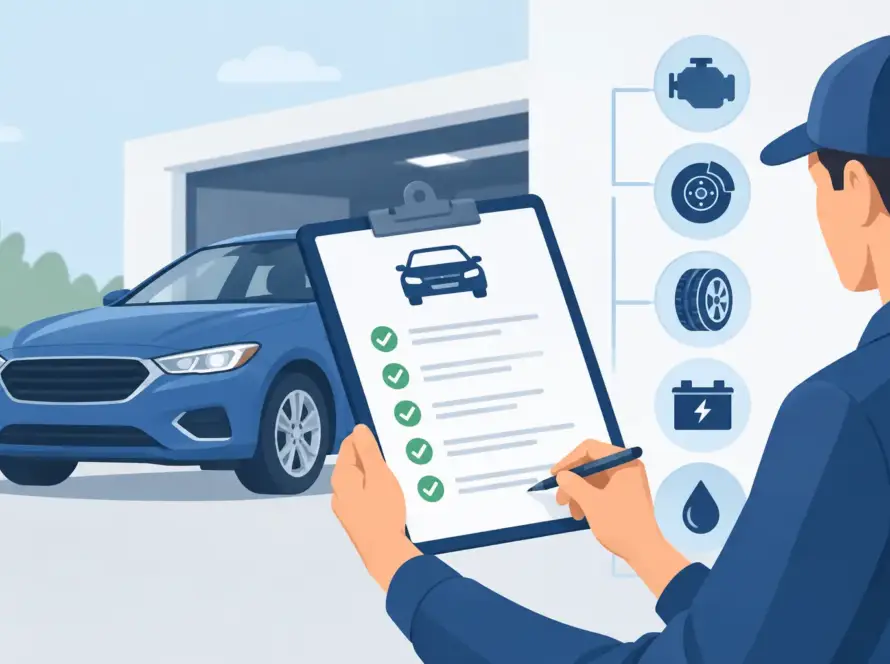
A clean showroom, a dealer stamp, and a reassuring “fully checked” claim can make a used car feel like a safe purchase. But dealer assessment versus independent inspector is not a choice between good and bad service. It is a question of who is evaluating the vehicle, what they are checking, and whether their findings are designed to protect the sale or protect the buyer.
For a used-car buyer in the UAE, that distinction can be worth thousands of dirhams. A car may look excellent after detailing while carrying prior accident repairs, developing transmission faults, worn suspension components, or warning codes that have recently been cleared. The right inspection does not just tell you whether a car starts. It gives you evidence to decide whether to buy, negotiate, or walk away.
What a dealer assessment usually tells you
A dealer assessment is an inspection performed by the selling dealer, an affiliated workshop, or a technician selected by the seller. It may be part of a certified pre-owned program, a preparation checklist, a workshop report, or an informal statement that the vehicle has been checked before sale.
There is value in this process. A reputable dealer may service the vehicle, replace consumables, check for obvious faults, and address items that could affect customer satisfaction. For buyers considering a dealer-backed warranty, the dealer’s report can also explain which repairs have been completed and what coverage may be available after purchase.
The limitation is not necessarily the technician’s ability. Many dealer technicians are skilled professionals. The issue is independence. The dealer owns the vehicle or is representing the seller, and the inspection is part of a transaction where the goal is to sell that vehicle. Findings may be framed around sale readiness, warranty requirements, or immediate repairs rather than a buyer’s complete risk picture.
A dealer checklist can also vary widely. One dealer may perform detailed diagnostics and road testing, while another may focus on basic safety items, appearance, fluid levels, and visible concerns. Unless you can see the full report and understand its scope, “dealer inspected” does not tell you whether the chassis was checked for structural repair, the underbody was examined, or computer fault history was reviewed.
Dealer assessment versus our independent inspector: the key difference
An independent inspector works for the buyer, not the dealer and not the private seller. Their job is not to make the vehicle more marketable. Their job is to identify evidence that affects your decision.
That changes the questions being asked. Instead of “Is this car ready to hand over?” an independent inspection asks: Has it had accident damage? Are panel gaps, paint readings, and chassis areas consistent with the seller’s claims? Does the engine perform correctly under load? Are there stored diagnostic codes? Does the transmission shift as it should? Is the suspension quiet and stable on the road? What will likely need attention soon?
This buyer-first approach is particularly useful when the car is expensive, the history is incomplete, or the vehicle is being sold with broad claims such as “accident free,” “agency maintained,” or “perfect condition.” Those claims may be accurate, but they should be verified before money changes hands.
An independent inspector also has no reason to soften an uncomfortable finding to preserve the sale. If the vehicle has signs of repainting, cooling-system leakage, weak battery performance, tire damage, or a previous repair that deserves closer attention, that information belongs in your report. You may still choose to buy the car, but you can do so with open eyes and a realistic price discussion.
What a CarChecker.ae pre-purchase inspection covers
The depth of the inspection matters more than the label on the service. A meaningful pre-purchase inspection should connect technical checks to the ownership risks you may face after purchase.
A comprehensive assessment examines the exterior for repainting, corrosion, misaligned panels, damaged glass, tire condition, and signs of prior repair. It checks the interior, controls, air conditioning, electronics, seats, displays, and safety equipment. Under the hood, the inspector looks for leaks, damaged components, fluid concerns, battery condition, and visible signs of poor maintenance.
The mechanical portion should go further. Engine operation, transmission behavior, steering, brakes, suspension, cooling performance, and drivetrain components need assessment. Computer diagnostics can reveal current or stored fault codes that a dashboard warning light alone may not show. An underbody inspection can expose damage, leaks, corrosion, or repairs that are impossible to judge from the showroom floor.
A road test is equally valuable when conditions allow it. Many faults only appear when the vehicle is moving: vibration at speed, brake pull, delayed shifting, suspension noise, overheating, steering play, or poor engine response. A stationary inspection cannot replace this part of the process.
For electric and hybrid vehicles, the inspection should also consider battery health indicators, charging-system behavior, high-voltage warnings, cooling systems, and the condition of relevant cables and components. Luxury, performance, commercial, and specialty vehicles may need extra attention because a single overlooked fault can carry a much higher repair bill.
When a dealer report may be enough
There are situations where a dealer report is useful and may provide reasonable reassurance. A nearly new vehicle sold by its original authorized dealer, with complete service records, remaining factory warranty, and a detailed written inspection can present less risk than an older vehicle with an unclear history.
Even then, read what the report actually says. Ask whether it includes diagnostic scanning, chassis and underbody checks, paint assessment, and a road test. Confirm whether any noted repairs were completed and request supporting invoices where available. A warranty is helpful, but it is not a substitute for understanding the vehicle’s current condition. Warranties can have exclusions, claim limits, waiting periods, or conditions that do not cover wear items and prior damage.
If the car is lower value and you accept some repair risk, you may decide a dealer report is sufficient. That is a budget decision, not proof that the vehicle has no hidden issues. The important part is making that decision knowingly.
When independent inspection is the smarter choice
Independent inspection is especially valuable for private sales, non-agency dealers, imported vehicles, older luxury cars, modified vehicles, and cars offered at prices that seem unusually attractive. It is also a strong choice when you are buying from another emirate or cannot personally inspect the vehicle in detail.
It helps when the seller is reluctant to allow an inspection, too. A reasonable seller should understand that a serious buyer needs verification before committing funds. Refusal does not automatically mean the car has a problem, but it is a risk signal worth taking seriously.
For first-time buyers and expatriates unfamiliar with local used-car practices, an independent report replaces guesswork with clear evidence. For experienced enthusiasts, it provides an objective second set of eyes. In both cases, the report should explain not only what was found, but how urgent it is and what it could cost you later.
CarChecker.ae brings that assessment to the vehicle’s location across the UAE, so buyers do not need to organize transport to a workshop or rely on the seller’s preferred garage. The goal is simple: give you a detailed, photo- and video-supported view of the car before you invest.
How to use both reports without being misled
You do not have to treat a dealer assessment and an independent inspection as competing documents. Use the dealer report as part of the vehicle’s story, then use the independent inspection to verify the story.
Compare the two carefully. If the dealer report says the car is accident free, ask whether the independent findings support that conclusion. If the dealer says recent maintenance was completed, check whether the vehicle’s condition and records align with the claim. If either report identifies repairs, clarify whether they are minor maintenance items, negotiating points, or reasons to stop the purchase.
Do not focus only on a pass-or-fail outcome. Almost every used vehicle has some imperfections. The decision comes down to severity, cost, safety, transparency, and price. A car with worn tires and minor cosmetic repairs may still be a sensible buy if the price reflects them. A car with questionable structural repairs, recurring fault codes, or major drivetrain concerns deserves much more caution.
The best inspection does not pressure you into buying or walking away. It gives you the facts to make the call. Before paying a deposit or transferring funds, make sure the person evaluating the vehicle is truly on your side.