The test drive feels smooth for ten minutes, the cabin is clean, and the seller says the car has “never had an issue.” Then, a week after payment, the transmission hesitates at a traffic light or slams into gear on Sheikh Zayed Road. A hidden gearbox fault is one of the most expensive surprises a used-car buyer can inherit, and it is rarely identified by a quick drive around the block.
Gearbox problems can be intermittent, temperature-dependent, or deliberately disguised with a recent fluid change, a battery reset, or a cleared warning light. That does not mean every used car with a rough shift is a bad purchase. It does mean the gearbox deserves a proper inspection before you commit your money.
Why a Hidden Gearbox Fault Is So Costly
The gearbox transfers engine power to the wheels. In an automatic vehicle, it uses fluid pressure, electronic controls, clutches, valves, and often a torque converter to select gears smoothly. In a manual car, the clutch, flywheel, gearbox internals, and hydraulics all need to work together. A fault in any of these areas can affect drivability and repair costs.
The financial risk varies widely. A software calibration, sensor, solenoid, or minor fluid leak may be manageable. Internal clutch wear, damaged gears, a failed valve body, torque converter trouble, or a complete transmission rebuild can cost many thousands of dirhams. On premium, performance, and luxury vehicles, the bill can rise quickly because parts, specialist labor, and programming requirements are more complex.
A seller may genuinely be unaware of the problem. Some faults only appear after the transmission reaches operating temperature, during hard acceleration, on an incline, or in stop-and-go traffic. Other sellers may describe a noticeable issue as “normal” or claim it only needs a simple reset. As a buyer, you need evidence rather than reassurance.
Signs of a Hidden Gearbox Fault During a Test Drive
A good test drive should include more than a short loop through a quiet parking area. Start the vehicle from cold if possible, then drive it through city traffic and at higher road speeds. Listen, feel, and pay attention to how the vehicle behaves when you ask it to do ordinary things.
A delay when moving from Park to Drive or Reverse is a warning sign, especially if the engine revs before the car engages. Harsh engagement, a pronounced jolt, or a clunk can point to transmission wear, low or contaminated fluid, mounting problems, or control issues. One isolated shift may not confirm a major failure, but it deserves investigation.
While driving, look for slipping. This happens when engine speed rises but the vehicle does not accelerate as expected, as though it has briefly lost its connection to the road. Notice whether the transmission hunts between gears, shifts too early or too late, flares between shifts, or shudders under light acceleration. A shudder can sometimes feel like driving over a rough strip of road.
Pay close attention at lower speeds. Many gearbox faults become obvious in UAE traffic, where the vehicle repeatedly shifts, stops, crawls forward, and accelerates again. If the car jerks when slowing down, refuses to downshift smoothly, or feels confused selecting a gear, do not assume that is simply how the model drives.
For a manual vehicle, check whether the clutch pedal feels unusually heavy, soft, or inconsistent. Difficulty selecting gears, grinding sounds, clutch slip under acceleration, or a biting point at the very top of pedal travel may indicate clutch or gearbox concerns. A worn clutch is not always a deal-breaker, but the expected repair cost should be reflected in the price.
Warning Lights Are Not the Whole Story
A transmission warning light is a clear reason to pause the purchase, but the absence of a warning light proves very little. Modern cars can store fault codes without displaying a dashboard message. Some faults are pending, intermittent, or recorded only in manufacturer-specific modules that basic scan tools do not fully access.
Clearing diagnostic codes may also remove a warning temporarily. After the vehicle completes enough driving cycles, the fault can return. That is why a proper diagnostic assessment should look beyond a simple “no codes found” statement. The inspector should review stored and pending faults, module communication, live transmission data where available, and whether the vehicle appears to have recently had codes erased.
A weak battery or charging issue can create strange electronic behavior, including transmission-related warnings. Equally, a genuine transmission fault can be incorrectly blamed on the battery. The point is not to diagnose from one message on the dashboard. It is to test the vehicle systematically and determine what the evidence supports.
What a Proper Gearbox Inspection Should Check
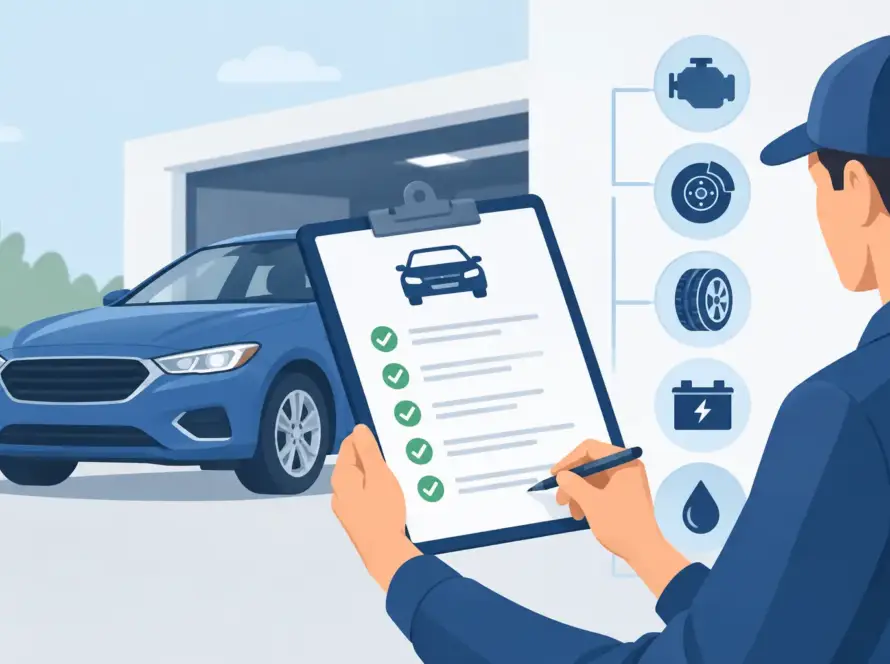
A pre-purchase inspection should combine diagnostic scanning, a controlled road test, visual checks, and an honest review of service history. Any one of these alone can miss a problem.
The underbody inspection matters because gearbox leaks may be hidden beneath covers, mixed with old oil residue, or mistaken for an engine leak. Transmission fluid condition can also reveal useful clues, although not all modern vehicles have an easily accessible dipstick. Burnt-smelling, heavily discolored, or contaminated fluid may indicate overheating or internal wear. Fresh fluid is not automatically good news either. If it was changed immediately before sale, ask why and whether there are service records to support the work.
The road test should evaluate cold and warm operation, low-speed behavior, acceleration, kickdown response, cruising, downshifts, reverse engagement, and performance under load where road conditions safely allow. An experienced inspector can distinguish between a characteristic shift pattern and behavior that suggests a fault.
Service history adds context. Some transmissions require scheduled fluid and filter changes, while others are marketed as sealed or long-life units. “Lifetime fluid” does not necessarily mean maintenance-free for the life of the vehicle. In the UAE, high ambient temperatures, heavy traffic, towing, and aggressive use can place additional stress on transmission components. Missing maintenance records do not prove neglect, but they should affect the buyer’s confidence and offer price.
When a Gearbox Issue May Be Acceptable
Not every finding should end the deal. A minor seepage, a known software update, or a small shift characteristic documented by the manufacturer may be manageable. The decision depends on the vehicle’s price, mileage, model reputation, repair estimate, warranty coverage, and your tolerance for risk.
What should concern you is uncertainty. If a seller will not allow a full inspection, dismisses obvious symptoms, refuses to provide records, or pressures you to pay before the vehicle is checked, walk away. There are always other cars. The cheapest listing can become the most expensive ownership experience when a hidden mechanical fault appears after the sale.
For a vehicle with a confirmed issue, obtain a realistic specialist estimate before negotiating. Do not reduce the price based on a guessed repair figure. A minor diagnostic code can lead to a major internal repair, and a discount that sounds generous may not cover the actual risk.
Inspect Before You Invest
A gearbox should never be judged by a seller’s description or a five-minute drive. It needs to be assessed as part of the vehicle’s wider mechanical condition, including engine performance, mounts, cooling, driveline components, underbody leaks, and computer diagnostics.
CarChecker.ae brings that independent assessment to the vehicle’s location, so buyers can see the evidence before making a decision. A detailed inspection will not make every used car perfect, but it gives you a clear view of what you are buying and what you may be taking on. Regardless of what you might hear, every gearbox needs maintenance, periodic preventive maintenance conducted by professionals using the correct equipment, fluids and procedures ensures a transmission remains healthy and operating correctly. The number one transmission killer is lack of maintenance and excessive heat, these two often being results of neglect
If the gearbox feels wrong, sounds wrong, or produces unexplained diagnostic faults, give yourself permission to pause. The right used car should earn your confidence before it earns your payment.